Where 2.70% comes from
A European wheel has 37 pockets. A straight-up bet wins one time in 37 and pays 35 to 1. If the game were fair it would pay 36 to 1. That one missing unit, divided across 37 pockets, is 1/37 = 2.7027%.
The paytable is constructed so that this fraction is preserved for every bet. A corner covers four pockets and pays 8:1 where fair would be 8.25:1. A dozen covers twelve and pays 2:1 where fair would be 2.083:1. Every route to the same destination.
House edge versus RTP
They are the same figure stated from opposite ends. RTP (return to player) is 100% minus the house edge: 97.30% on a European wheel, 94.74% on American, 98.65% on French even-money bets.
Both describe long-run averages over enormous numbers of spins. Neither predicts a session. A 97.30% RTP does not mean you get $97.30 back from $100 — it means that across millions of spins across all players, the game returns that proportion.
What it costs per hour
The only formula worth memorising:
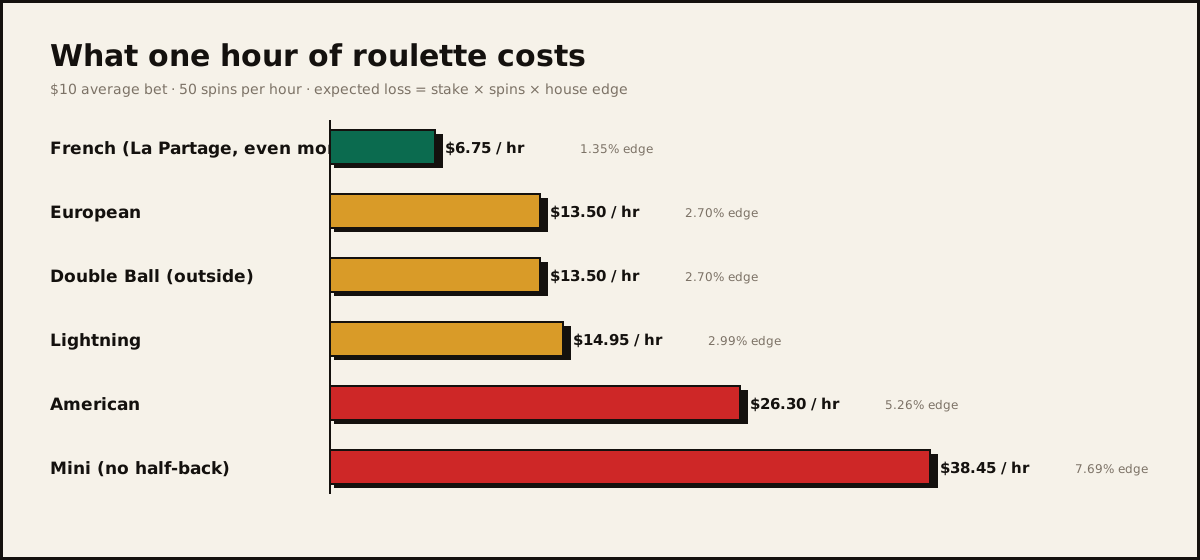
Expected hourly cost = average bet × spins per hour × house edge
| Average bet | European (50/hr) | American (50/hr) | European (110/hr RNG) |
|---|---|---|---|
| $1 | $1.35 | $2.63 | $2.97 |
| $5 | $6.75 | $13.15 | $14.85 |
| $10 | $13.50 | $26.30 | $29.70 |
| $25 | $33.75 | $65.75 | $74.25 |
| $100 | $135.00 | $263.00 | $297.00 |
Note the right-hand column. Fast RNG roulette more than doubles the hourly cost of the same stake purely through speed. If you want to reduce what roulette costs you and are not willing to lower your stake, slow down instead.
Why the edge is certain for the casino and not for you
The house edge is a long-run average, and 'long run' means tens of thousands of spins. An operator running thousands of tables reaches that sample size every single day, so for them the edge is effectively a guaranteed revenue line.
You will play a few hundred spins in an evening. At that sample size variance dominates completely: winning sessions are common, and they are not evidence of anything. This asymmetry is the business model, stated plainly.
Reducing it — the three things that work
- Choose the right wheel. French with La Partage at 1.35%, then European at 2.70%. Never American when another option exists. This single choice halves or quarters your cost.
- Play slower. Cost scales linearly with spins per hour. A live dealer table at 35 spins an hour costs a third of what fast RNG roulette costs at the same stake.
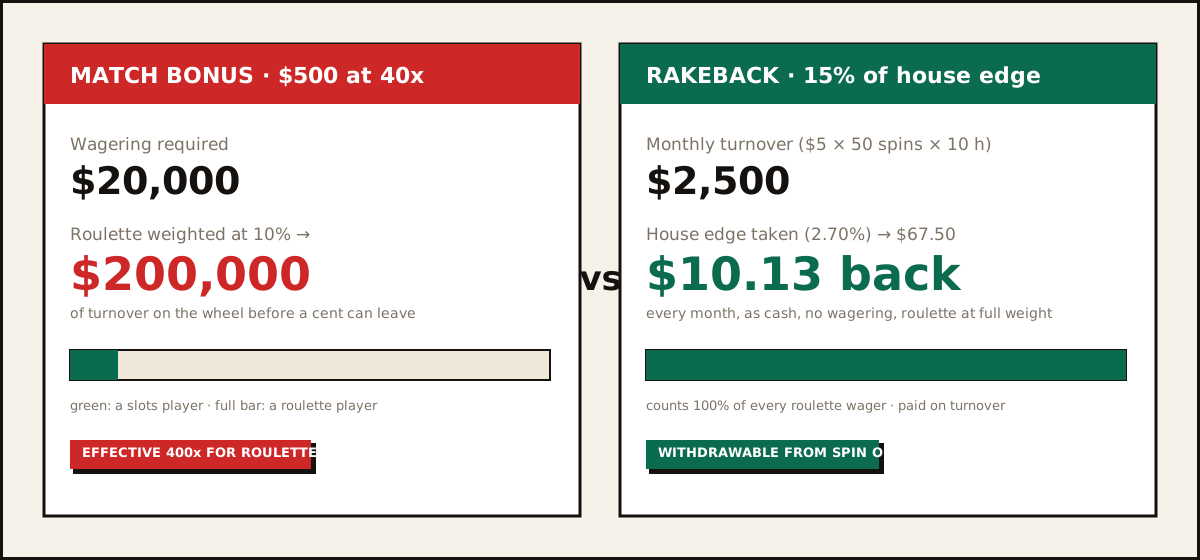
- Take rakeback, not bonuses. Rakeback reduces the effective edge on every spin. A 15% rate on a European wheel brings 2.70% down to about 2.30%.
What does not work: betting systems, hot numbers, dealer signature at an online table, and any product sold to you on the promise of beating the wheel.
Edge versus hold, and why casinos quote different numbers
House edge is the theoretical percentage of each wager the game keeps. Hold is what the table actually kept over a period, measured against the money players bought in with — and hold is usually far higher, because players recycle winnings back into more bets.
A roulette table with a 2.70% edge can post a 20% hold, and both numbers are honest. For you, the number that matters is the edge applied to your turnover, which is why the only useful budgeting formula uses spins and average bet rather than the amount you brought.
What the edge does not predict
It does not predict your session. Over 100 spins, variance dominates completely; the expected loss is a small number sitting inside a much larger range of plausible outcomes. Winning sessions are common at every stake and prove nothing.
It does not predict when a run ends, because there are no runs in any meaningful sense — each spin is independent. And it does not apply to a specific bet: a straight-up bet is not “2.70% likely” to win, it is 2.70% of stake expected to be lost.
Rakeback, in edge terms
Rakeback is usually calculated on the theoretical house edge your wagering generates rather than on turnover. Fifteen per cent rakeback on a European wheel therefore returns 15% of 2.70%, or about 0.4% of everything you stake — which brings your effective edge down to roughly 2.30%.
That is a real reduction and it applies to every spin, but it is smaller than the headline percentage suggests. The rakeback calculator shows both readings side by side so you can see which basis an operator is using.
Putting this into practice
Reading changes very little on its own. Three things reliably do.
First, open a free table and play 200 spins flat. Watch how the balance moves, how long the swings last, and how quickly 200 spins actually goes. That is the texture of the game, and it is not what most people expect.
Second, put your real stake and session length into the bankroll calculator. The hourly cost it returns is the honest price of the entertainment. If that number is comfortable, the rest is detail. If it is not, lower the stake or slow the table — those are the only two levers that work.
Third, if you are comparing casino offers, run them through the wagering calculator before you deposit rather than after.